Understanding Part L Window Requirements in 2026
For decades, specifying windows and doors for commercial and large-scale residential developments followed a predictable pattern. Architectural aesthetics and budget took center stage, while compliance with building regulations was often handled as a final check-box exercise before breaking ground.
That landscape has fundamentally shifted. Driven by the UK’s strict net-zero targets and the implementation of the Future Homes and Buildings Standards, energy efficiency is no longer background noise – it is driving the entire design process.
As we navigate the current regulatory landscape, the updated Approved Document Part L (Energy and Greenhouse Gas Emissions) has introduced stricter parameters for thermal performance, solar control, and installation accountability. For architects, main contractors, and developers, mastering Part L window requirements in 2026 is critical to avoiding costly redesigns and project delays.
Here is what you need to know about navigating Part L window requirements in 2026, and how a fabric-first approach can futureproof your next project.
The Stricter Reality of U-values
Part L focuses heavily on the conservation of fuel and power, aiming to drastically reduce operational carbon emissions in both dwellings (Volume 1) and non-dwellings (Volume 2). The most direct impact on fenestration is the tightening of whole-window thermal transmittance, or U-values (measured in $\text{W/m}^2\text{K}$).
When evaluating Part L window requirements in 2026, building control enforces significantly lower limiting U-values to pass SAP (Standard Assessment Procedure) and SBEM (Simplified Building Energy Model) calculations.
- To comfortably achieve compliance within overall building fabric targets, specifying windows with U-values of 1.2 $\text{W/m}^2\text{K}$ or lower has become the standard baseline for renovations and standard new builds.
- For forward-thinking, high-specification residential developments, retirement villages, and schools looking ahead to true zero-carbon readiness, meeting the stricter Part L window requirements in 2026 means pushing even lower – frequently demanding architectural glazing that hits 0.8 $\text{W/m}^2\text{K}$ or below.
Why Double Glazing Falls Short of Part L Window Requirements in 2026
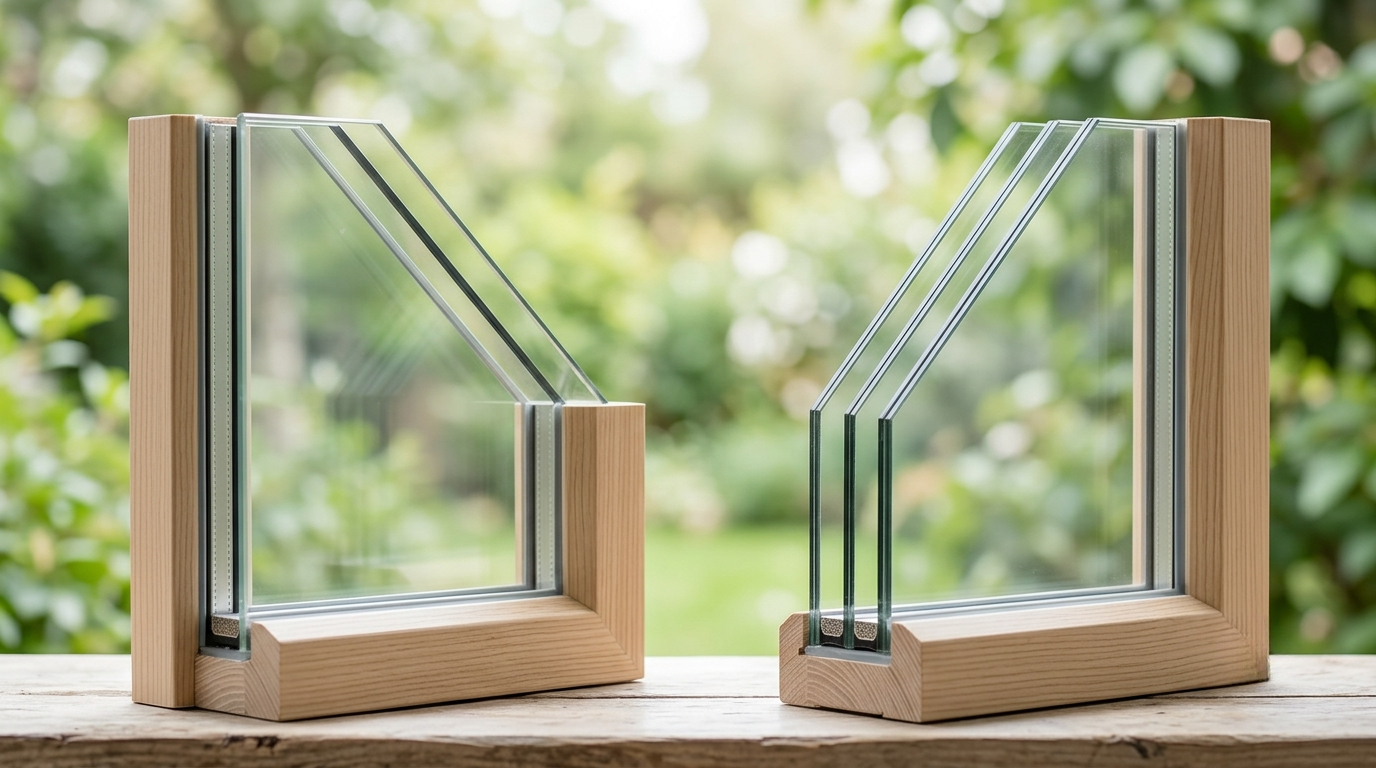
While advanced, highly optimised double glazing can still scrape through baseline compliance in minor refurbishments, it severely restricts design freedom on larger commercial projects.
If you choose a window system with a borderline U-value that barely meets Part L window requirements in 2026, you are forced to compensate by over-insulating other parts of the building fabric. This means adding thicker walls, costlier insulation, or sacrificing the expansive, floor-to-ceiling glass facades that modern architectural trends demand.
Furthermore, Part L window requirements in 2026 require sophisticated modeling for solar gain and overheating. Large expanses of glazing must strike a delicate balance: maximising natural daylight while preventing buildings from becoming greenhouses in the summer. Achieving this without relying on expensive, carbon-heavy mechanical cooling systems requires highly engineered glazing that goes beyond the bare minimum of Part L window requirements in 2026.
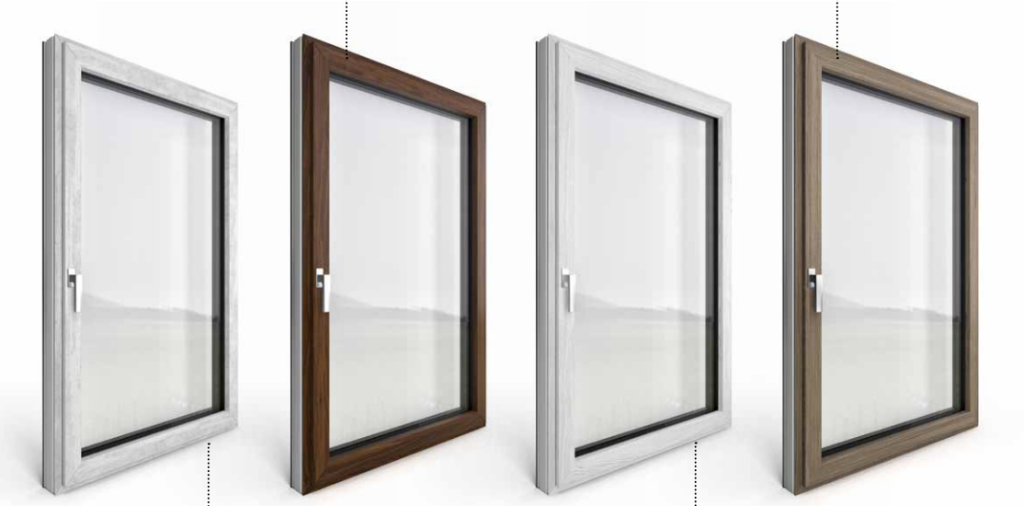
The Internorm Solution: Engineering Beyond Compliance
At Internorm Commercial, we have long advocated for a fabric-first approach. By choosing window systems that vastly outperform the baseline Part L window requirements in 2026, you eliminate the stress of compliance modeling and protect your building’s longevity.
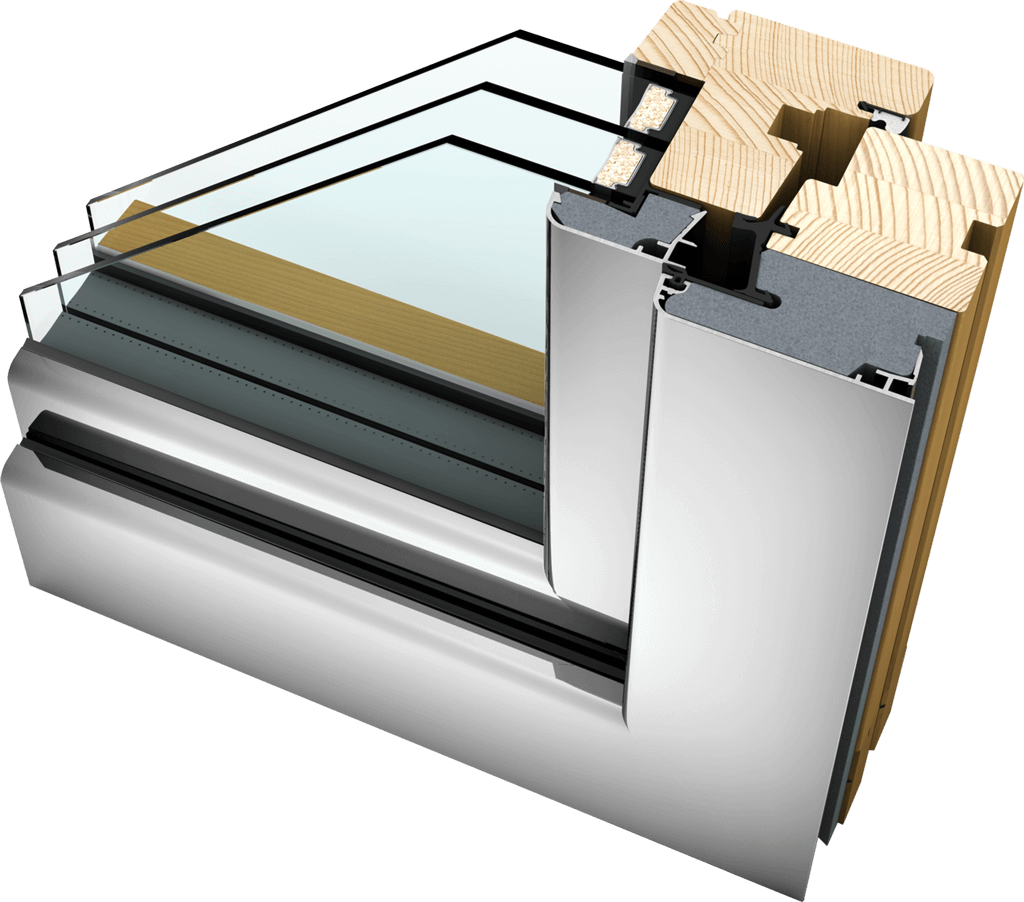
Our bespoke triple-glazed systems are engineered precisely to satisfy and exceed Part L window requirements in 2026:
| Window System Attribute | How It Meets Part L Window Requirements in 2026 |
|---|---|
| Market-Leading Insulation | Our uPVC-aluminium systems, including the KF 510 and KV 440, achieve exceptional certified U-values as low as 0.62 W/m²K. This comfortably surpasses standard Part L window requirements in 2026 while also meeting ultra-strict Passivhaus standards. |
| Intelligent Solar Control | Integrated I-tec Shading systems and advanced glazing coatings help architects design expansive glazed facades that naturally control solar heat gain, supporting compliance with overheating criteria within Part L window requirements in 2026. |
| Acoustic Excellence | In busy urban commercial developments, energy efficiency must work alongside occupant comfort. Internorm systems combine high thermal performance with outstanding acoustic insulation, helping keep external city noise outside while maintaining indoor comfort. |
Installation and Accountability: The Performance Gap
In 2026, compliance is not just about the product that leaves the factory; it’s about how it performs once integrated into the building structure. Building control authorities are paying closer attention than ever to the performance gap – the difference between theoretical energy efficiency and real-world performance.
As a result, fulfilling Part L window requirements in 2026 places a heavy emphasis on airtightness, thermal bridging, and rigorous installation documentation (including photographic evidence at key structural stages). Relying solely on expanding foam is a method of the past. Modern commercial installations demand airtightness tapes, insulated cavity closers, and meticulous sealing protocols.
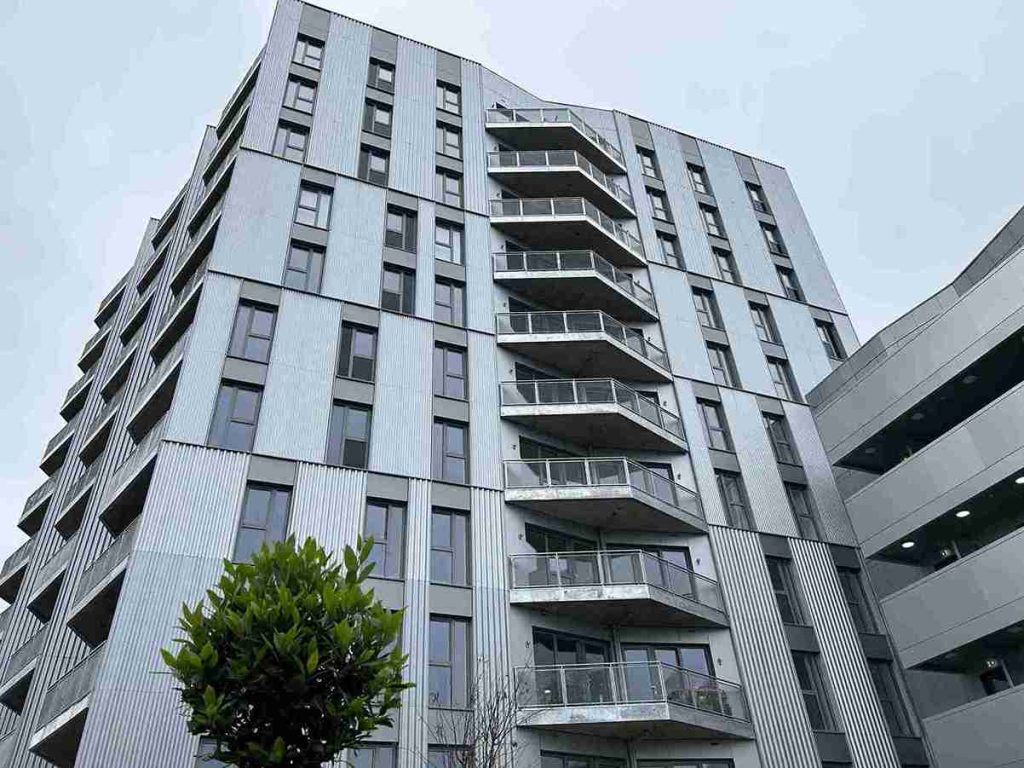
The Internorm Commercial Team works directly as an invaluable partner alongside developers, architects, and main contractors from the initial concept stage. We assist with technical specification, detailing window-to-wall junctions to eliminate thermal bridging, and ensuring that our bespoke systems deliver the precise airtightness required to satisfy all Part L window requirements in 2026 and pass final building tests seamlessly.
Futureproof Your Next Project
Designing a building to meet the bare minimum of today’s regulations risks creating an obsolete asset tomorrow. Embracing premium, high-performance triple glazing isn’t just about satisfying a building inspector or meeting the baseline Part L window requirements in 2026 – it’s about lowering operational costs, minimising lifecycle carbon emissions, and creating superior spaces for people to live and work.
Ready to navigate the complexities of architectural glazing compliance? Contact the Internorm Commercial Team today to discuss how our bespoke timber-aluminium and uPVC composite solutions can help you easily exceed Part L window requirements in 2026 on your next development.

- How ESG Targets Are Influencing Window Specification Decisions - 18 August 2026
- How High-Performance Glazing Supports Net Zero Building Targets - 16 April 2026
- Understanding Part L Window Requirements in 2026 - 10 February 2026
Categories: Sustainability, Timber/Aluminium, Windows
Tags: Compliance Regulations, Part L Window, U-Values, Windows Requirements